
How to Begin Ihram at Miqat Points for Hajj and Umrah
For every pilgrim heading toward the Holy Land, the journey of Hajj or Umrah does not begin at the gates of Masjid al-Haram — it begins much earlier, at a Miqat. Understanding when and where to enter the state of Ihram is one of the most important parts of preparing for a valid pilgrimage. Missing or misunderstanding your Miqat can affect the validity of your Hajj or Umrah, so it’s worth taking the time to get it right before you travel.
What Is a Miqat?
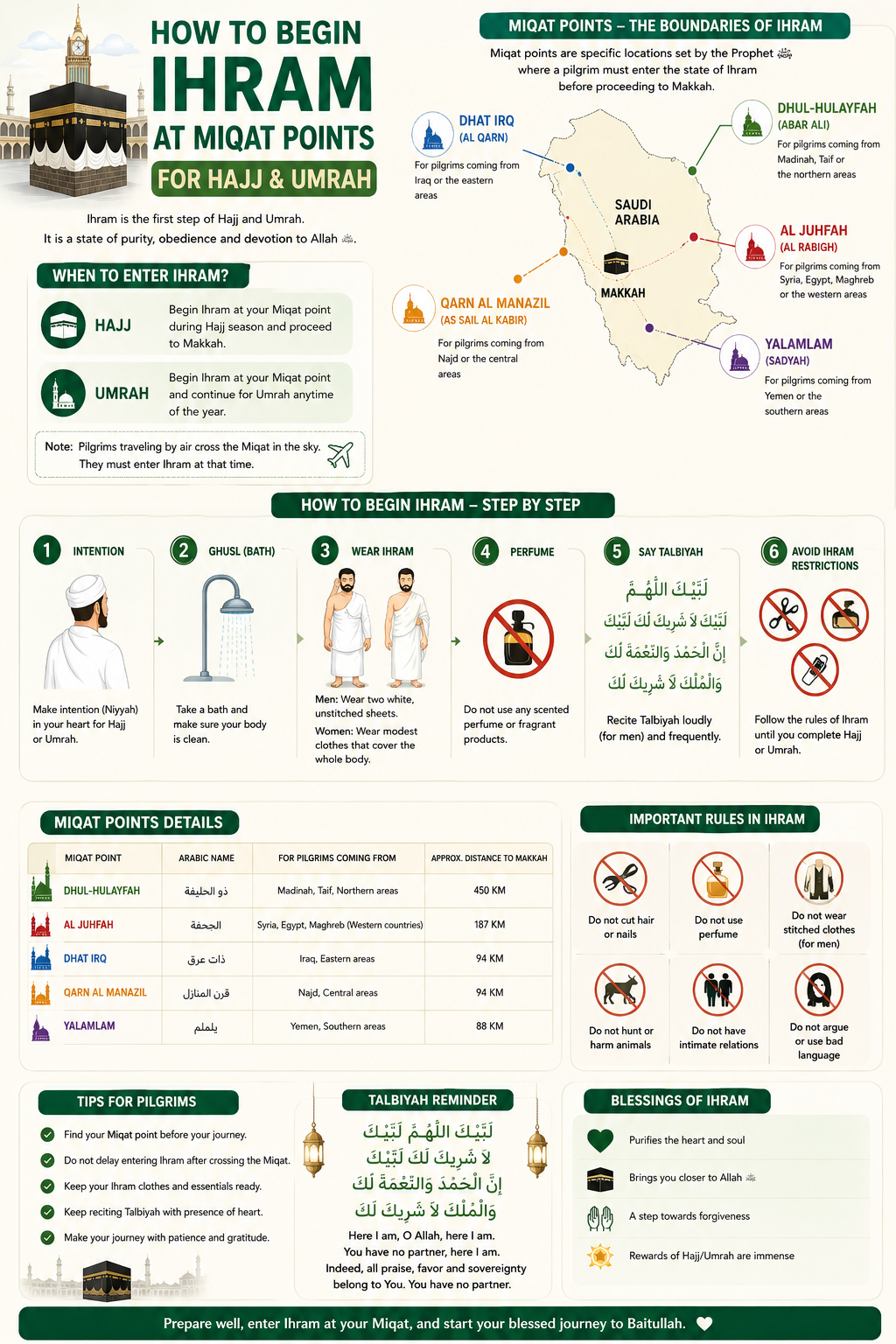
A Miqat is a designated boundary point set by the Prophet Muhammad (peace be upon him) where pilgrims coming from outside the sacred precincts must enter into the state of Ihram before proceeding toward Makkah. There are five main Miqat points, each assigned based on the direction a pilgrim is traveling from:
- Dhul Hulaifah (Abyar Ali) – for pilgrims coming from Madinah
- Al-Juhfah – for pilgrims coming from Syria, Egypt, and North Africa
- Qarn al-Manazil (As-Sayl al-Kabir) – for pilgrims coming from Najd and the Gulf region
- Yalamlam – for pilgrims coming from Yemen and parts of Asia
- Dhat Irq – for pilgrims coming from Iraq and the east
If you are flying directly into Jeddah, your Miqat is typically determined by the direction you are arriving from, and airlines often announce when the plane is crossing the Miqat boundary so passengers can prepare in advance.
Steps to Begin Ihram at the Miqat
- Perform Ghusl (ritual bath) before reaching the Miqat, if possible. This is a recommended Sunnah practice, not an obligation, but many pilgrims prefer to arrive already purified.
- Wear the Ihram garments. Men wear two unstitched white sheets, while women wear simple, modest clothing that covers the body appropriately without resembling Ihram-specific attire.
- Make the intention (Niyyah) for either Hajj, Umrah, or both, depending on the type of pilgrimage you are performing.
- Recite the Talbiyah (“Labbayk Allahumma Labbayk…”) once Ihram begins, and continue reciting it frequently throughout the journey to Makkah.
- Observe the restrictions of Ihram, which include avoiding perfume, cutting hair or nails, hunting, and marital relations until Ihram is completed.
Common Mistakes Pilgrims Make at Miqat
Many first-time pilgrims accidentally cross the Miqat boundary without entering Ihram, especially when traveling by road or connecting through Jeddah before continuing toward Makkah. This is a common issue for travelers arranging their own transport rather than booking through an organized group. If you’re planning your route independently, it helps to work with a reliable transport provider — a trusted service like Umrah Taxii can guide you on exactly where the Miqat boundary falls along your route so you don’t cross it unintentionally.
Another frequent question travelers ask is about logistics after entering Ihram — particularly if their itinerary includes visiting Madinah before or after Makkah. Knowing the Makkah to Madinah taxi price in advance can help you plan your budget and schedule around your Miqat and Ihram timing, so there’s no last-minute rush once you’re already in a state of Ihram.
Planning Your Transport Around Miqat Timing
Since Ihram restrictions begin the moment you pass the Miqat, it’s wise to arrange your ground transportation before you even land in Saudi Arabia. Coordinating your ride in advance means you won’t be scrambling to find a taxi while already in Ihram, robes on, at an airport or Miqat station. Many pilgrims now prefer to complete their entire journey through a single, organized Umrah taxi booking, which takes care of airport pickup, the stop at the Miqat for Ihram preparation, and the final drop-off at your hotel in Makkah — all in one seamless trip.
Final Thoughts
Entering Ihram at the correct Miqat is not just a ritual formality — it’s a foundational requirement for a valid Hajj or Umrah. Take time before your trip to know your Miqat point based on your travel route, prepare your Ihram garments in advance, and arrange reliable transport so the moment you cross that sacred boundary, you’re fully ready — spiritually and logistically — for the journey ahead.